
Why Transitional Housing Plays a Critical Role in Addiction Recovery Across Southeast Wisconsin
August 8, 2026
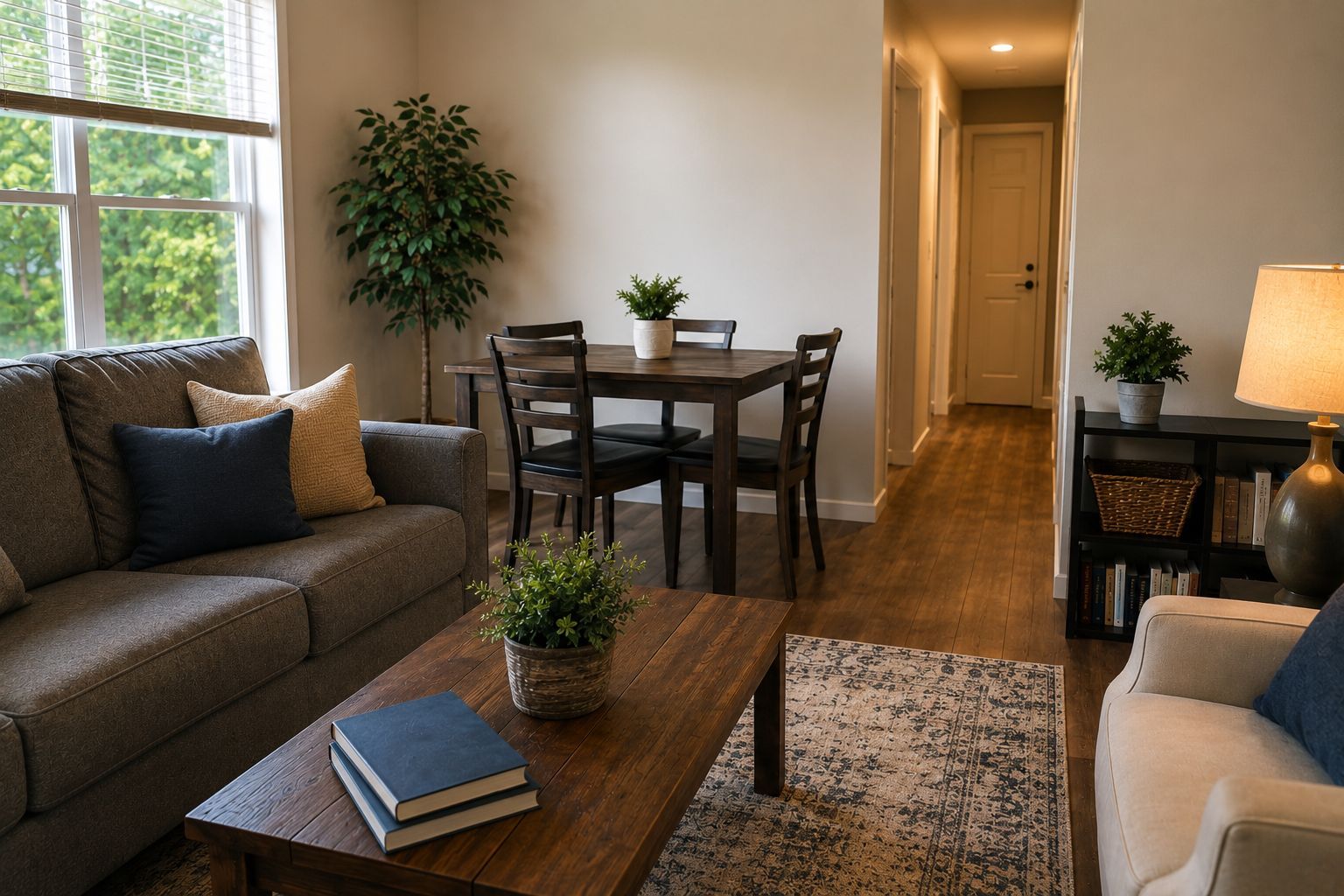
QUICK ANSWER: Transitional housing matters because the days right after treatment ends are some of the highest-risk days in the entire recovery process, and going straight from a treatment program back into an unchanged home environment removes exactly the structure and accountability a person needs most in that window. Research comparing people who lived in recovery housing to people who received the same treatment without it has found abstinence rates roughly twice as high, outpatient treatment retention around 89% versus a national average near 43%, and employment and income gains that carry well past the first year. Across Southeast Wisconsin, where fatal overdoses have finally started trending down after years of record highs, that gap between treatment and full independence is exactly where transitional housing does its work.
Somewhere between the last day of a treatment program and the first day back in a life that hasn't changed, a lot of hard-won progress gets tested. The apartment is the same. The people who used to call are still calling. The stress that was there before treatment is still there after it. Families often assume the hardest part is finishing treatment itself — but the transition out of it is where a large share of early relapses actually happen, precisely because nothing in the surrounding environment has caught up to the change happening inside the person.
Southeast Wisconsin has spent the last several years watching this play out at scale. Statewide, overdose deaths climbed to a record high a few years ago before finally beginning a steady decline — dropping by roughly a third between 2022 and 2024. Milwaukee County alone recorded several hundred overdose deaths in a recent year, and county officials have since reported consecutive years of decline in both total and opioid-specific fatalities. That progress is real, but it didn't happen by accident — it tracks closely with the expansion of the exact kind of continuum-of-care support, including transitional and recovery housing, that fills the gap treatment alone can't close.
What Transitional Housing Actually Provides
Transitional housing — often called sober living — isn't treatment, and it isn't simply a place to sleep. It sits in a specific, deliberate spot in the recovery process: after the intensive structure of clinical treatment ends, but before someone is expected to manage full independence and every trigger that comes with it on their own.
A substance-free environment with real accountability
Structured homes typically require abstinence, participation in recovery meetings, and some form of monitoring such as periodic testing. This isn't about punishment — it's about protecting a fragile early stage of recovery long enough for it to become sturdy.
A bridge, not a landing pad
Residents in transitional housing are usually working, attending outpatient therapy, or going to school while they live there, which is a meaningfully different role than a treatment facility plays. The home supports the life someone is rebuilding rather than pausing it.
Daily structure that rebuilds routine
Active
addiction tends to erode the basic rhythms of a day — regular sleep, meals, responsibilities, follow-through. House expectations, shared chores, and curfews sound small, but they're often the first consistent structure a person has had in months or years, and that consistency does real work.
What the Research Actually Shows
The case for transitional housing isn't just a feeling shared by people who run these programs — it shows up clearly across decades of published outcome research.
Abstinence rates roughly double
Multiple studies comparing recovery housing residents to people who received similar treatment without that housing piece have found abstinence rates in the range of 50% to 69% among recovery housing residents, compared to roughly 27% to 37% among those without it, measured across six- to eighteen-month follow-up periods.
Outpatient treatment retention jumps sharply
One widely cited study found an 89% outpatient treatment retention rate among residents living in recovery housing, compared with a national average outpatient completion rate closer to 43%. Simply put, people stay engaged in their own treatment longer when the environment they go home to each night supports it instead of undermining it.
Employment and income both improve
Recovery housing residents have shown employment rates as much as 25 to 30 percentage points higher than comparable individuals without that housing support, along with more than double the average monthly income in at least one long-term study. Rebuilding a working life is part of what the structure is designed to protect time and space for.
Lower rates of rearrest
One study found a 3% incarceration rate among recovery housing residents compared to 9% among people receiving standard care without housing support — evidence that the stability transitional housing provides extends well beyond substance use itself.
TIP: If you're evaluating a transitional housing option for yourself or a family member, ask specifically whether the home is affiliated with a treatment program and whether it follows a recognized set of quality standards. Research has found that homes connected to a treatment program and structured around active peer community — not just a rule sheet on a wall — consistently produce better outcomes than informal, unaffiliated houses.
Why This Matters Specifically Right Now in Southeast Wisconsin
The need for this bridge isn't hypothetical here. Wisconsin's Department of Health Services maintains a statewide registry of more than 200 registered recovery residences, organized by county, and runs a Recovery Voucher Grant Program aimed specifically at helping people experiencing homelessness with an opioid use disorder find stable housing in a recovery residence. The state also has its own affiliate of the National Alliance for Recovery Residences, the Wisconsin Association of Sober Housing, which certifies homes against nationally recognized quality standards.
None of that infrastructure exists because transitional housing is a nice-to-have. It exists because the population density and treatment demand across the Milwaukee, Waukesha, Racine, and Kenosha corridor make the step-down period after treatment one of the most consequential windows in a person's recovery — and because the data on what happens when that window is unsupported is well documented.
The overdose numbers are improving, not solved. A drop in fatal overdoses across the region is genuinely good news, and it reflects real progress in treatment access and harm reduction efforts. It doesn't mean the risk has disappeared for any individual person leaving treatment — it means the systems supporting recovery, including transitional housing, are working, and that they need to keep being built out rather than treated as optional.
What Separates a Strong Program From a Risky One
Not every sober living arrangement is built the same way, and the difference matters more than it might seem from the outside.
Peer community, not just a rule list
Homes that build a genuine social model of recovery — residents supporting each other, mandatory participation in mutual-aid meetings, shared accountability — show meaningfully better outcomes than homes that are only enforcing rules without building that community underneath them.
Willingness to support medication-assisted treatment
For residents using medication as part of their treatment plan, homes that fully support it rather than restricting or discouraging it tend to see better retention in both housing and treatment, along with fewer overdose events.
WARNING: An unaffiliated house with no connection to a treatment provider, no consistent accountability structure, and no willingness to support a resident's prescribed treatment plan can do real harm during an already fragile stage of recovery. Structure and community are the parts of transitional housing doing the protective work — a home missing both isn't providing the same thing, even if it's marketed the same way.
How Long Someone Should Expect to Stay
There's no single right answer here, and that's by design rather than a gap in the research. Some residents stay a few months; others benefit from a longer stay depending on their progress, stability, and support system outside the home. Many programs point to roughly 90 days as a reasonable minimum — long enough to establish a routine, build or stabilize employment, and strengthen coping skills — before someone transitions toward fully independent living. Leaving too early, before that routine has taken hold, is one of the more common and preventable reasons early progress doesn't stick.
Frequently Asked Questions
What's the difference between transitional housing and inpatient rehab?
Inpatient rehab is intensive, structured clinical treatment for a fixed period. Transitional housing comes after, offering a substance-free living environment where residents work, study, or attend outpatient care while building recovery skills with peer support.
How long should someone stay in transitional housing?
There's no universal timeline, but many programs suggest a minimum of around 90 days for routines, employment, and coping skills to take hold. Leaving too early, before stability sets in, raises the risk of relapse.
Does transitional housing actually reduce the risk of relapse?
Research consistently shows better outcomes for people in structured recovery housing compared to those without it, including higher abstinence rates and longer treatment retention. Shared accountability, routine, and peer support are the main protective factors.
Who is a good candidate for transitional housing?
People who've completed detox or inpatient treatment and need continued accountability before full independence are typically good candidates, especially if home life carries stress, triggers, or limited support, or if re-entering recovery after a setback.
What rules are typically enforced in a transitional housing program?
Most programs require abstinence, periodic testing, participation in recovery meetings, shared house responsibilities, chores, and curfews. These aren't punitive measures — they're structural guardrails designed to protect early recovery while trust and independence are rebuilt.
Can someone work or go to school while living in transitional housing?
Yes, and most programs actively encourage it. Rebuilding a working routine, whether through a job, school, or volunteer commitment, is considered part of the recovery process, not something that happens only after transitional housing ends.
Closing the Gap Between Treatment and Home
Recovery isn't undone by a lack of willpower — it's undone by an environment that hasn't caught up to the change happening inside a person. That's the gap transitional housing was built to close, and it's why the days after treatment carry so much weight. With 15 years of experience supporting residents through that exact window, 4TH DIMENSIOn Sobriety has seen firsthand how structure, accountability, and community turn a fragile first few months into a foundation that actually holds.
Across Milwaukee, WI, and the wider region, the numbers tell a consistent story: people supported by recovery housing stay in treatment longer, stay sober more often, and rebuild stable, working lives at rates that unsupported transitions simply can't match. None of that happens by accident. It happens because someone made space for routine, peer support, and steady accountability to take root during the hardest stretch of recovery — the quiet, unglamorous work that ends up mattering more than almost anything else.