Clinical Treatment vs. Sober Living: Understanding the Difference and When You Need Each
June 29, 2026

You finished a program. Or maybe someone you care about just got out of detox and is sitting at a kitchen table wondering what comes next. The discharge paperwork uses terms like "PHP," "IOP," "transitional housing," and "sober living environment," and none of it quite explains which one actually fits where you are right now. That confusion is one of the most common reasons people fall through the cracks between getting help and staying well.
The difference between clinical treatment and sober living is not just about where you sleep. It is about what level of structure, medical oversight, and therapeutic support your recovery requires at a specific point in time. Getting that match wrong in either direction, either staying in a clinical level of care longer than necessary or moving to sober living before you are ready, can disrupt progress that took enormous effort to build.
What Clinical Treatment Actually Involves
Clinical treatment is a medically and therapeutically structured program delivered by licensed professionals. It can happen at several levels of intensity, and each level is defined by specific clinical criteria rather than personal preference or convenience.
Detoxification is the most acute level. For alcohol and benzodiazepine withdrawal in particular, medical supervision is not optional. Withdrawal from these substances can produce seizures, cardiac events, and in some cases death. Anyone experiencing shaking, sweating, confusion, or elevated heart rate after stopping alcohol or sedatives needs medical evaluation before anything else.
Residential treatment involves living at a facility around the clock while receiving individual therapy, group therapy, medical management, and psychiatric evaluation. Most residential programs run 28 to 90 days. This level of care is appropriate when a person cannot maintain abstinence in their home environment, when co-occurring mental health conditions require daily clinical attention, or when the home environment itself is unsafe.
Partial Hospitalization Programs (PHP) provide five to six hours of structured treatment per day, five days per week, while the person returns to a stable living environment in the evenings. It is sometimes called "day treatment" and functions as a step-down from residential care or a step-up from outpatient.
Intensive Outpatient Programs (IOP) typically involve nine to twelve hours of treatment per week spread across three to four days. This level is appropriate for people with a stable home environment, strong social support, and enough time in recovery to handle fewer hours of supervision.
All of these levels share one defining characteristic: they are run by licensed clinical professionals, they involve formal diagnosis and treatment planning under state-regulated standards, and they are typically eligible for insurance coverage.
What Sober Living Actually Is
Sober living is not treatment. That distinction matters enormously and gets blurred more often than it should.
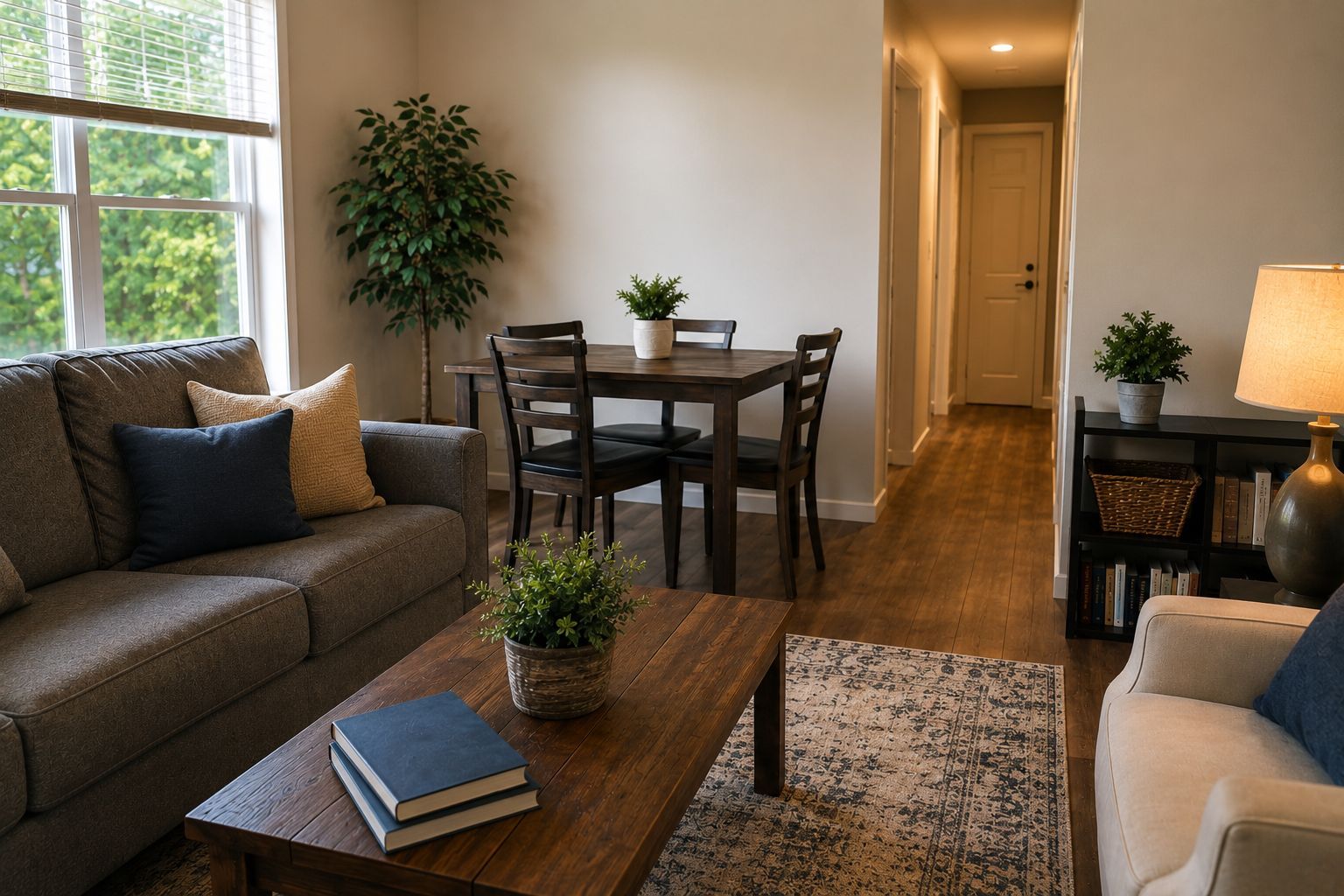
A sober living home, also called a sober living environment or recovery residence, is a shared housing arrangement where residents agree to maintain sobriety, follow house rules, and support one another's recovery. There is no clinical staff on site in most cases. There are no group therapy sessions facilitated by a licensed counselor, no medication management, and no formal treatment planning.
What sober living provides is structure, accountability, and a peer community during the transition back to independent living. Residents typically submit to regular drug testing, attend house meetings, contribute to household responsibilities, and may be required to participate in outpatient treatment or support groups while living there.
Recovery residences in Wisconsin are not required to be licensed as treatment facilities because they are not providing treatment. Some are affiliated with clinical programs and maintain referral relationships. Others operate independently. Quality varies significantly, and that variance matters when you are evaluating options.
Sober living is most valuable in the six to eighteen months following the completion of a clinical program, when a person needs time to rebuild employment, finances, and daily routines without the constant proximity of their old using environment.
When You Need Clinical Treatment
You need clinical treatment, not just a sober living placement, when any of the following apply.
You are still actively using and have not completed a medically supervised withdrawal. You have a co-occurring psychiatric diagnosis that is currently destabilizing your functioning. Your previous attempts at recovery failed within weeks of leaving a clinical program. You do not have a safe and sober place to return to during outpatient hours. You are experiencing thoughts of self-harm or suicidal ideation.
Milwaukee winters add a practical layer to this. Isolation during January and February in Wisconsin is a documented risk factor for relapse and mental health deterioration. People who exit treatment in late fall without a structured living environment and a clinical step-down plan face a particularly difficult stretch. We see this pattern regularly in intake assessments conducted after post-holiday relapses.
When You Need Sober Living
Sober living becomes the right next step when you have completed a formal clinical program, you are medically stable and not in acute psychiatric crisis, you need accountability and peer support but not daily clinical supervision, and your previous home environment poses a clear relapse risk.
It is also appropriate when you need time to rebuild practical life skills before resuming full independence. Many people leaving residential treatment are returning to a city where their social networks are deeply tied to substance use. A sober living environment in Milwaukee provides geographic separation from those networks while you establish new ones.
When You Need Both, in the Right Order
The most effective recovery continuum involves clinical treatment followed by sober living, not one or the other. Research consistently shows that extending the total length of the recovery support period reduces relapse rates, and the combination of clinical services plus structured housing does exactly that.
The sequence matters. Sober living before completing clinical treatment is not a substitute for that treatment. Attempting to stabilize a person who needs PHP-level care in a peer-run household without clinical oversight is a common and costly mistake. The reverse is also true: keeping someone in a residential clinical program long after they have met their treatment goals delays the transition work that sober living is designed to support.
A clinical assessment, not intuition, should determine where on this continuum a person starts and how quickly they move through it.
Diagnostic Guide: Matching Level of Care to Your Situation
| What You Are Experiencing | Likely Level of Care Needed | Urgency | First Step |
|---|---|---|---|
| Active daily use, no prior treatment | Medical detox followed by residential | High | Emergency evaluation |
| Completed detox, unstable at home | Residential or PHP | High | Clinical intake assessment |
| Stable, completed residential, needs housing | Sober living with IOP | Medium | Recovery residence evaluation |
| Strong outpatient history, needs peer support | Sober living | Medium | Recovery residence tour and application |
| Co-occurring psychiatric symptoms | Dual diagnosis residential or PHP | High | Psychiatric evaluation first |
| Relapse after prior treatment | Step back to previous clinical level | High | Intake reassessment |
| Recently housed, early recovery | IOP plus sober living | Medium | Contact clinical program for coordination |
| Long-term recovery, social instability | Sober living only | Low | Peer community referral |
Proven Milwaukee Recovery Guidance From 4th Dimension Centers
The single most important principle in this article is that level of care must be driven by clinical criteria, not by what is available, affordable, or convenient at the moment. That principle is harder to act on in Milwaukee than it might seem on paper. Wisconsin has persistent gaps in behavioral health resources, wait times for residential programs can stretch into weeks during high-demand periods, and the geographic spread of the city means that transportation barriers affect which options are realistically accessible for many people.
At 4th Dimension Recovery Centers, we have spent 10 years navigating exactly these conditions with clients across Milwaukee, Wisconsin. We provide clinical assessment, structured treatment programming, and coordination across the continuum of care so that people do not end up in the wrong level of care simply because someone failed to map the right one. We serve clients throughout the region.
FAQs
Can I go directly to sober living without completing a treatment program?
You can, but it is rarely the right decision in early recovery. Sober living provides accountability, not clinical care. Without formal treatment addressing the underlying drivers of use, peer support alone has a low success rate. A clinical assessment will clarify where you need to start.
Does insurance cover sober living in Wisconsin?
Most private insurance plans do not cover sober living because it is housing, not treatment. Insurance typically covers clinical programs like PHP and IOP that run alongside it. Some Wisconsin state-funded programs do provide recovery housing assistance. Verify your benefits before making any housing decisions.
How long should someone stay in sober living after completing residential treatment?
Six months is the meaningful threshold most recovery housing research points to. People who stay at least six months show lower relapse rates at the one-year mark. Milwaukee's seasonal isolation and limited transportation in some neighborhoods make a longer stay strategically sound for many residents.
What is the difference between a sober living home and a halfway house?
Halfway houses serve people returning from incarceration and are typically court-ordered, government-contracted facilities. Sober living homes are voluntary peer communities built around recovery maintenance. Both require sobriety, but the population, oversight structure, and admission process differ significantly. Most people leaving clinical addiction treatment enter sober living, not halfway houses.
What happens if someone relapses while living in a sober living home?
Most sober living homes require residents who relapse to return to clinical care before being readmitted. This is appropriate. A relapse is a clinical signal indicating the step-down from treatment came too soon. Re-entering PHP or IOP is the expected path forward, not evidence that recovery has failed.